
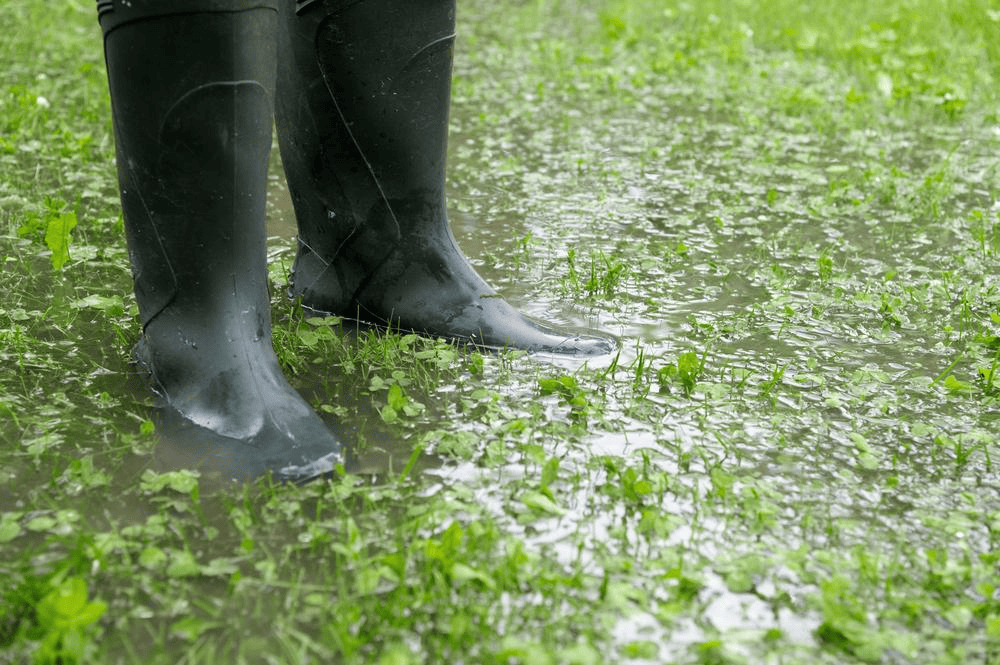
Standing water in a Black River Falls yard usually comes down to three things: how fast the soil drains, where the low ground on the lot sits, and how close the property is to the Black River’s water table. Getting that diagnosis right is what decides whether a weekend fix holds through the next storm or gets redone every spring. Twisted Oak Landscape works on grading, drainage correction, and retaining wall solutions for Black River Falls properties, built around the rules enforced by the Jackson County Zoning Department.
Key Takeaways
- Standing water here almost always traces back to soil texture, low spots, or the water table, not bad luck.
- Soil type is measurable, and it changes the whole diagnosis (details below).
- Small pooling calls for aeration or a downspout fix; water that keeps returning near the foundation calls for a professional look.
- Grading or filling in a mapped floodplain area can trigger a permit requirement through Jackson County.
- A soggy yard and a struggling septic system are often the same root problem.
Introduction
If you’ve watched rainwater pool across your lawn near Highway 54 or the low streets off Main Street days after a storm, you’re not imagining a drainage problem. Black River Falls sits low along the Black River, and much of the surrounding ground holds water at the surface longer than homeowners expect.
Standing water in your yard rarely fixes itself, and piling on topsoil or renting a French drain kit can make things worse without knowing where that water actually needs to go. Twisted Oak Landscape has spent years working excavation, grading, and hardscaping projects around Black River Falls, and we see the same drainage mistakes come up again and again.
Why You Have Standing Water in Your Yard in Black River Falls
Most yards here deal with a mix of low spots, compacted ground near driveways, and, in some areas, a higher water table tied to the Black River. Low spots act like small basins that catch runoff instead of releasing it. Compacted soil near driveways and heavily used areas blocks water from soaking in at all. Homes closer to the river can see groundwater rise even without recent rain, and downspouts or hard surfaces like patios and driveways add even more runoff on top of ground that’s already struggling to absorb it.
Texture matters more than most homeowners realize. According to USDA soil quality guidance, clayey soils typically absorb water at a rate of 0.2 inches per hour or less, while sandy soils commonly exceed 0.8 inches per hour. That difference is the reason two yards a few blocks apart can have completely different drainage problems. The free USDA Web Soil Survey tool lets any homeowner pull up their own parcel and see which soil type they’re actually working with, rather than guessing.
This matters in Black River Falls specifically because much of town sits inside the Black River watershed. Under Wisconsin DNR floodplain rules, grading, filling, or excavation in a mapped floodplain area is legally considered “development,” and it can require a permit through Jackson County zoning before any digging starts. More on how that permit process actually works later on.
How Standing Water Damages Your Lawn, Foundation, and Septic System
Water sitting on the lawn for more than a day or two starves grass roots of oxygen and invites fungal disease. Pooled water is also one of the fastest ways to attract mosquitoes. The EPA notes that a mosquito’s full life cycle from egg to flying adult typically takes about two weeks, but can happen in as little as four days under warm, wet conditions, which is a short window for water to sit undisturbed.
Chronic saturation around the foundation can contribute to settling, cracked concrete, or basement seepage over time. Most drainage companies won’t tell you this, but a soggy yard and a struggling septic system are often connected. The EPA identifies high ground water tables and inadequate soils as common causes of septic drain field failure, alongside poor design and lack of routine maintenance.
One sign worth watching for: soft, spongy ground directly over the drain field, even during a stretch with no recent rain, is one of the clearer indicators the system itself needs a look, not just the yard around it. If your septic field sits downhill from a wet area, the fix usually isn’t the septic system itself, it’s rerouting the surface water before it ever reaches the field. Actual septic diagnosis and repair should go to a licensed septic professional; our role is stopping the water from getting there in the first place.
Simple Fixes for Standing Water in Your Lawn
Aerating compacted turf lets water soak in instead of sheeting across the surface, a reasonable first step for mild, spread-out wetness, and it pairs well with our lawn care services if the turf itself needs rehab afterward. Extending a downspout several feet from the foundation solves a surprising number of small wet spots. Native, water-tolerant rain gardens, which fall under our softscaping services, absorb runoff better than turf alone in heavier soil.
The mistake that costs Black River Falls homeowners the most is piling topsoil onto a low spot without fixing the compaction underneath first. That creates a sponge sitting on a barrier the water still can’t get through, so the new soil resaturates and can push water toward the foundation instead.
DIY vs. Professional: Which Fix Actually Matches Your Problem
| Problem | DIY Approach | Professional Approach |
|---|---|---|
| Compacted soil | Core aeration | Soil replacement or amendment |
| Downspout runoff | Downspout extension | Underground pipe to a legal discharge point |
| High water table | Rarely effective long-term | French drain or curtain drain |
| Poor grading | Temporary topsoil fill | Regrading with an engineered slope |
| Wet spot near septic field | Keep vehicles and heavy equipment off it | Reroute surface water, refer septic inspection to a licensed provider |
Is It a Quick Fix or a Bigger Problem? A Simple Way to Check
Does the water disappear within 24 hours after the rain stops?
- Yes: likely surface compaction or a shallow low spot. Aeration or a downspout extension is a reasonable first move.
- No: keep going.
Does the water sit near the foundation?
- Yes: possibly a grading issue. Worth a professional assessment before it affects the foundation.
- No: keep going.
Is the wet area near or downhill from the septic drain field?
- Yes: the drainage may be overloading the septic system. Have a licensed septic professional check the field, and have the surface water rerouted away from it.
- No: keep going.
Is the property near the Black River or inside a mapped floodplain?
- Yes: this may be a seasonal high water table. Usually needs a French drain or curtain drain, and the permit rules covered below likely apply.
- No: a full site assessment is the fastest way to pin down the actual cause.
When to Hire a Jackson County Drainage Contractor
If the simple fixes above haven’t stopped the pooling after a full season, the cause is likely below the surface. A professional assessment measures yard slope, soil type, and where water can legally discharge before any digging starts, since the right system depends on those measurements rather than which product looks best online.
Contrary to common advice, scheduling major grading work in early spring or fall, once the ground has thawed but before it’s fully saturated, tends to go easier than fighting either frozen ground or a waterlogged summer trench.
Seasonal Drainage Checklist for Black River Falls
Spring: Snowmelt plus already-saturated ground is the biggest driver of standing water here. This is when marginal drainage shows its problems first.
Summer: Thunderstorms test whether a French drain or swale can handle a fast, heavy rain event, not just slow, steady soaking.
Fall: Falling leaves clog catch basins and downspout screens, which redirects water somewhere it wasn’t planned to go.
Winter: Frozen ground and freeze-thaw cycles can heave pipe and turn a working summer slope into an ice sheet by January.
Maintenance That Keeps Drainage Working
- Inspect French drains, swales, and catch basins each spring after snowmelt.
- Clear leaves and debris from catch basins and downspout screens before fall rains.
- Have drain lines flushed every few years to prevent silt buildup.
- Walk the yard after any storm that drops an inch or more of rain, and note new wet spots early, before they damage turf or reach the foundation.
Frequently Asked Questions
What causes standing water in my yard in Black River Falls?
Low spots, compacted soil, and a high water table near the Black River are the most common causes, often made worse by downspouts draining too close to the house.
How much does drainage or French drain work near me typically cost?
Cost depends on soil conditions, trench depth, and where water can legally discharge, so a site visit gives a far more accurate number than a generic online estimate.
Can I fix a soggy yard myself?
Minor pooling often responds to aeration, downspout extensions, or a small rain garden, but water that keeps returning near the foundation usually needs a professional grading plan.
Do I need a permit for yard drainage work in Jackson County?
Grading, filling, or piping in mapped floodplain areas near the Black River can require a permit through the Jackson County Zoning Department, so check before digging.
When should I call a Jackson County drainage contractor?
Call a professional once water keeps coming back after DIY fixes, sits near the foundation, or affects your septic system. Twisted Oak Landscape offers a professional drainage assessment to find the real cause first.
Get Expert Help for Standing Water in Your Yard in Black River Falls
Standing water in your yard doesn’t have to be permanent in Black River Falls. Whether you need a simple downspout fix or a full drainage and grading plan, addressing the real cause now saves you from foundation damage, septic problems, or another ruined lawn next spring. Contact Twisted Oak Landscape for a professional drainage assessment and request a quote today.