
Direct Answer
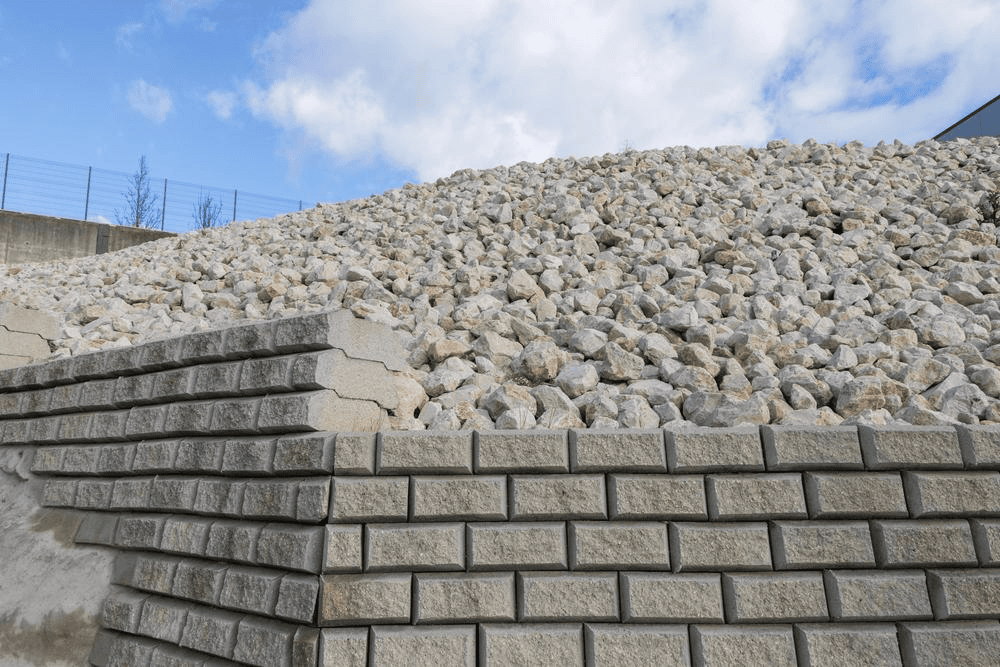
Concrete interlocking blocks are the best overall retaining wall material for Wisconsin soil, offering the ideal balance of structural durability and price. Natural stone provides the longest lifespan for those with higher budgets, while timber is the cheapest upfront but fails the fastest in wet climates.
- Concrete interlocking blocks have an expected lifespan of 40 to 50 years when installed with proper engineered drainage.
- Natural stone outlasts all other materials at 75 to 100 years but costs two to three times the price of concrete block.
- Pressure-treated timber is a short-term solution that typically only lasts 10 to 15 years before requiring total replacement.
- Retaining walls taller than 4 feet automatically require a building permit and plans under the Wisconsin Uniform Dwelling Code.
- Skipping an aggregate drainage base is a guaranteed failure point due to the local silt layer and a 48-inch frost depth.
- The best installation window is late September through October when excavation is cleanest and soil is driest.
For Black River Falls homeowners, concrete interlocking blocks are the most durable retaining wall material, lasting 40 to 50 years with proper drainage installation. Natural stone outlasts all other options at 75 to 100 years but costs significantly more upfront. Timber is the least expensive to buy but fails fastest in Wisconsin’s wet climate. Walls over 4 feet tall in Jackson County require a building permit under the Wisconsin Uniform Dwelling Code.
- Cost comparison: Natural stone runs 2 to 3 times the price of concrete block. Timber costs the least upfront; its replacement cycle raises total cost.
- Best overall pick: Concrete interlocking blocks deliver the best balance of durability and price for most Black River Falls residential projects.
- Permit rule: Walls above 4 feet need a permit and plans under the Wisconsin Uniform Dwelling Code.
- Drainage warning: The silt layer beneath local topsoil is nearly impermeable when wet. Skipping drainage causes most failures here.
- Best install window: Late September through October. Driest soil, cleanest excavation, and common material discounts.
Choosing the best retaining wall materials for Wisconsin soil starts with what is actually under your yard in Black River Falls. The area’s sandy-silt profile, a seasonal perched water table 1.5 to 3.5 feet below grade, and a 48-inch frost depth eliminate certain materials quickly and require engineered drainage behind every wall.
Concrete interlocking blocks offer the best structural strength and value for most residential projects. Natural stone lasts longest. Timber costs the least upfront but carries the shortest lifespan in this climate.
Why Does Black River Falls Soil Make Retaining Wall Material Choice Critical?
Properties near the Black River corridor and Wazee Lake sit above a perched water table that rises fast during spring thaw. Sandy topsoil drains quickly under light rain, which creates a false sense of security. Under sustained rain or snowmelt, the fine silt layer below traps water and builds lateral pressure against the wall face.
- Slopes steeper than 3:1 require tiered wall systems; a single tall wall concentrates too much pressure against local soil.
- Terrace-style designs with multiple shorter walls distribute load more evenly and reduce long-term structural risk.
Our hardscaping services in Black River Falls are engineered around local soil conditions, not standard installation templates.
What Makes Concrete Interlocking Blocks the Top Choice for Wisconsin Retaining Walls?
Commercial-grade interlocking blocks weigh 60 to 80 pounds each. That mass resists the lateral pressure of saturated local soils in ways lightweight big-box units cannot. The recessed lip prevents forward rotation when frost heave pushes from behind. A 12 to 18-inch compacted angular aggregate base below the first course is required; the frost depth here makes a shallow base a guaranteed failure point.
- Structural-grade units outperform big-box alternatives under Jackson County freeze-thaw conditions.
- Expected service life: 40 to 50 years with engineered drainage and a properly compacted base.
- Walls under 2 feet are manageable DIY projects; anything structural or taller requires professional installation.
How Does Natural Stone Compare as a Retaining Wall Material in Wisconsin?
Wisconsin fieldstone and quarried limestone are the two most common choices in this region. Fieldstone suits rural properties near the Black River watershed. Cut limestone offers consistent sizing and a cleaner line for higher-visibility yards along Highway 12. Skilled placement is essential; the weight and precision involved make DIY stone wall installation impractical at any structural height.
- Dry-stacked or pinned stone walls let water weep freely through the face, cutting hydrostatic pressure without a separate drain pipe.
- Mortared stone traps water on slopes with active drainage challenges; avoid it on Black River Falls hillside applications.
- Stone adds measurable property value in ways timber cannot and outlasts the structures it supports.
Is Timber a Viable Retaining Wall Option for Black River Falls Properties?
Pressure-treated lumber rated UC4B or UC4C for ground contact is the minimum standard here. Railroad ties are not acceptable: they leach creosote into soil and are increasingly difficult to source with compliant treatment grades. Timber walls in Jackson County often fail at the soil line before any surface deterioration is visible. By the time a lean appears, the base posts are already compromised.
- UC4B or UC4C is the minimum lumber grade; lesser grades shorten an already limited service window.
- Railroad ties are off the table in Black River Falls due to creosote contamination risk.
- Budget for replacement within that service window; treat timber as a temporary solution from day one.
- Best use case: low-budget, short-term projects where the owner accepts the trade-off.
How Do Retaining Wall Material Costs Compare in Black River Falls?
Concrete interlocking block offers the best cost-to-lifespan ratio for most Jackson County projects. Stone costs the most upfront but the least over a 50-year horizon. Timber costs the least to start but the most over time when replacement cycles are included.
| Material | Relative Cost | Lifespan | Best For |
|---|---|---|---|
| Concrete interlocking blocks | Mid-range | 40-50 yrs | Most residential projects |
| Natural stone | Highest (2-3x concrete) | 75-100 yrs | cLong-term / curb appeal |
| Timber (UC4B/UC4C) | Lowest upfront | 10-15 yrs | Short-term / low-budget |
| Poured concrete | High | 50+ yrs | Large / constrained walls |
Figures represent relative cost ranges only. Actual project costs depend on wall height, site access, drainage requirements, and current material pricing. Figures may vary. Verify with a local provider.
For material pickup near Black River Falls, see our landscape materials page for angular crushed stone, geotextile fabric, and decorative stone options.
What Drainage and Building Code Requirements Apply to Retaining Walls in Black River Falls?
Water trapped behind a wall without a toe drain and aggregate backfill freezes, expands, and creates an ice lens that pushes the base course forward. Every dollar cut from the drainage budget typically costs three dollars in tearout and rebuild.
- Use 3/4-inch angular crushed stone only; oversized river rock lets silt migrate into drainage voids and block flow within two seasons.
- Wrap all aggregate in heavy-duty non-woven geotextile fabric to keep sand and silt out of the drainage layer.
- Jackson County properties near the Black River may need a Shoreland Zoning Permit before excavation begins.
Wisconsin permit requirements are set by the Wisconsin Department of Safety and Professional Services (DSPS). Our landscape services team handles permit coordination for every structural wall project.
Frequently Asked Questions
What is the longest-lasting retaining wall material for Wisconsin winters?
Natural stone leads on lifespan, as covered above. Concrete interlocking blocks are the practical second choice for most Black River Falls budgets.
Can I build a DIY retaining wall in Black River Falls?
Walls under 2 feet are manageable for a skilled DIYer. Professional installation is required above that height. Improper base depth and missed drainage are the two most common failure points.
What is the cheapest retaining wall material available?
Timber has the lowest purchase cost. As the timber section explains, the replacement cycle makes its lifetime cost higher than a concrete block wall built correctly once.
Do retaining walls in Black River Falls require a building permit?
Yes. Walls above the height threshold in the code section need a permit and engineer-stamped plans. Shoreland properties may also need a county permit. Contact us to confirm site requirements.
When is the best time to schedule retaining wall installation?
Late September through October. Soil is driest, excavation is cleanest, and suppliers often discount block inventory before winter.
Schedule Your Retaining Wall Consultation in Black River Falls
A leaning wall or eroding slope is an active structural risk. Whether you need a material recommendation, drainage assessment, or permit guidance for your Jackson County property, our team gives you a straight answer with transparent pricing and no hidden fees. Request your consultation and protect your property before the next Wisconsin winter arrives.